California Cottage Food Law: A 2026 Guide for Home Bakers and Makers
By Hobby Stall Team · June 13, 2026 · 4 min read
California's cottage food law gives home bakers, jam makers, and specialty food producers a clear legal path to sell without a commercial kitchen. You do need a county permit, and there are two tiers with different sales caps and sales channels. Here's what the law actually says, so you can set up your operation correctly from day one.
Two permit classes, two sales channels
California uses a two-class system established under the California Homemade Food Act (Health & Safety Code § 114365). The class you choose determines where you can sell and how much you can earn.
Class A operators sell exclusively direct to consumers. That means home pickup, certified farmers markets, farm stands, and community events. You apply for a permit through your county environmental health department. No annual inspection is required, though the county may conduct one. California law sets a base gross annual sales cap of $75,000 for Class A operations, indexed each year to the California Consumer Price Index. CDPH publishes the current CPI-adjusted limits in its Cottage Food Operation Adjusted Gross Annual Sales Limit table (for example, the 2025 adjusted cap is $86,206 for Class A).
Class B operators can do everything Class A allows, plus sell through permitted third-party retailers, like a local coffee shop, boutique grocery, or cafe. The tradeoff is a required annual inspection by your county environmental health department. The base statutory cap for Class B is $150,000 in gross annual sales, also indexed annually for inflation, with CDPH's adjusted-limit table showing the higher CPI-adjusted amounts in effect for each year. San Bernardino County and other counties repeat the same structure in their guidance.
If you're just starting out, Class A is simpler. You can upgrade to Class B later once you have consistent demand from retailers.
What you can sell
California law allows non-potentially hazardous foods, meaning products that don't support bacterial growth at room temperature. The California Department of Public Health maintains the official approved list, and it covers a solid range of products for most home producers.
Allowed:
- Breads, rolls, biscuits, muffins, tortillas
- Cookies, brownies, cakes (without cream or custard filling)
- Fruit pies and pastries (no cream filling)
- Jams, jellies, preserves, and marmalades (high-acid fruits only)
- Dried fruit, dried herbs, and spice mixes
- Granola, trail mix, roasted nuts, and nut butters
- Candy, fudge, caramel corn, chocolate-covered items
- Honey and waffle cones
Not allowed:
- Anything requiring refrigeration
- Cream cheese frosting, custard, whipped cream fillings
- Meat, poultry, or seafood products
- Fresh-cut fruit or vegetables
- Low-acid canned goods (tomatoes, green beans, etc.) without lab-verified pH
- Cheesecakes or cream pies
If you make a product that sits in a gray area, contact your county environmental health department before you start selling. Counties have some discretion in how they interpret the approved list, and a quick phone call beats a compliance issue down the road.
Labeling requirements
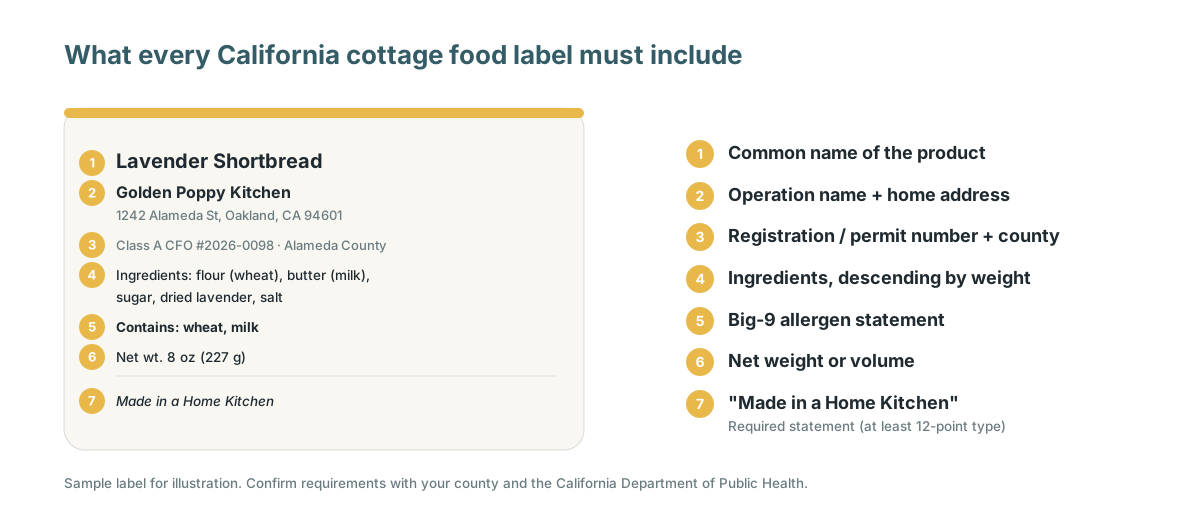
Every product you sell must have a label firmly attached to the packaging. California's label requirements, set by Health & Safety Code § 114365.2, include:
- Product name (common or usual name)
- The cottage food operation's name and home address where the food was produced
- Your registration or permit number and the name of the county that issued it
- Ingredients in descending order by weight, including sub-ingredients
- Allergen statements for the Big 9: milk, eggs, fish, shellfish, tree nuts, peanuts, wheat, soybeans, and sesame
- Net weight or volume
- The statement "Made in a Home Kitchen" in at least 12-point type
That 12-point statement trips up more first-time sellers than anything else on the label. Counties measure it, and a font that's too small is the single most common reason a label gets sent back. Keep your ingredient list current, especially after you change a recipe.
The permit process
Cottage food permits are issued at the county level in California, not the state level. The CDPH sets the framework; your county environmental health department handles the paperwork.
The general steps look like this:
- Visit your county environmental health department's website and locate their cottage food or home kitchen permit application. Los Angeles County, San Francisco, and most other counties have dedicated pages.
- Submit the application with any required documentation. Some counties require a home kitchen self-inspection checklist.
- Pay the permit fee. Fees vary widely by county, from around $50 to several hundred dollars annually. Check with your county directly.
- Receive your permit and keep it on file. Class B operations should schedule their first inspection with the county.
There is no state-level registration. Your county permit is your legal authorization to operate.
Sales tax
Cottage food products sold directly to consumers in California are generally exempt from sales tax as grocery items under Revenue and Taxation Code § 6359. Prepared foods intended for immediate consumption may be taxable. If you're selling at events where food is consumed on-site, check with the California Department of Tax and Fee Administration to confirm how your products are classified.
Selling on a platform like Hobby Stall
If you want to run preorders, schedule drop windows for fresh batches, or manage pickup slots without juggling a spreadsheet, a local storefront platform can help. Hobby Stall is built specifically for this kind of operation: no transaction fees on orders, Venmo or Cash App handoff, and drop scheduling so your buyers know exactly when your next batch is available. See how it works or start your shop.
This post is general information, not legal advice. Verify current requirements with your county environmental health department and the California Department of Public Health before launching your cottage food operation.
Frequently asked questions
- Do I need a permit to sell cottage food in California?
- Class A operators sell directly to consumers and need a permit from their county environmental health department. Class B operators sell both directly and through third-party retailers and need a county health permit with an annual inspection. The application process and fees vary by county, so contact your local environmental health department to start.
- What is the sales cap for California cottage food?
- As of 2026, Class A cottage food operations are capped at $75,000 in gross annual sales. Class B operations are capped at $150,000. These limits are adjusted periodically by the California Department of Public Health, so verify the current figures at cdph.ca.gov before planning your business.
- Can I sell cottage food online and ship it in California?
- Class A operators may take orders online but must arrange direct delivery or pickup within California. You cannot ship to out-of-state buyers. Class B operators may sell through third-party retailers within California. Interstate shipping requires federal licensing that cottage food law does not cover.
- What foods are prohibited under California cottage food law?
- Any food that requires refrigeration is prohibited. This includes cream-filled pastries, cheesecakes, cream cheese frosting, custards, meat and poultry products, pickles and low-acid canned goods without lab-verified pH, and fresh-cut produce. The permitted list covers non-potentially hazardous foods only.
- What must appear on a California cottage food label?
- Every label must include the product name, the cottage food operation's name and home address, your Class A or Class B registration or permit number and the county that issued it, the ingredients in descending order by weight, allergen statements, net weight or volume, and the statement 'Made in a Home Kitchen' in at least 12-point type.
- Can I sell at farmers markets under California cottage food law?
- Yes. Both Class A and Class B operators may sell at certified farmers markets. Class B operators can also sell at farm stands and through permitted third-party retailers like grocery stores and cafes, as long as the products are properly labeled and pre-packaged.
Keep reading
- Colorado Cottage Food Law: A 2026 Guide for Home Bakers and Makers
Colorado's cottage food law caps revenue per product at $10,000 annually, requires food safety training and business registration, and allows a wide range of shelf-stable foods. Learn the rules, labeling requirements, and allowed products as of June 2026.
- Florida Cottage Food Law: A 2026 Guide for Home Bakers and Makers
Florida's cottage food law requires zero permits, zero inspections, and zero training. Learn the $250K sales cap, allowed foods, labeling rules, and where you can sell under Florida Statute § 500.80 as of June 2026.
- Square Online vs Hobby Stall for Cottage Food Sellers
Square Online and Hobby Stall both support local pickup and preorders, but they're built for different sellers. This comparison covers pricing, fees, local pickup setup, and which platform fits cottage food and home-based food businesses in 2026.