Florida Cottage Food Law: A 2026 Guide for Home Bakers and Makers
By Hobby Stall Team · June 13, 2026 · 4 min read
Florida has one of the most permissive cottage food laws in the country. No state permit, no inspection, no food safety training requirement. You can start selling tomorrow if your products, labels, and sales channel all comply with Florida Statute § 500.80. Here's what that actually requires.
What Florida law covers
Florida Statute § 500.80 creates the cottage food exemption. It lets individuals sell specific non-potentially hazardous foods made in a home kitchen directly to consumers, without obtaining a license from the Florida Department of Agriculture and Consumer Services (FDACS). The full text of the statute is published at leg.state.fl.us.
The exemption comes with a $250,000 gross annual sales cap. That's not a typo, it genuinely is a quarter million dollars. For most home producers, it's effectively uncapped for years.
What you can sell
Florida's allowed list sticks to non-potentially hazardous foods, meaning anything that's shelf-stable at room temperature.
Allowed:
- Breads, rolls, biscuits, and muffins
- Cookies, cakes (no cream or custard filling), brownies
- Fruit pies (double-crust, high-acid fruit fillings)
- Jams, jellies, fruit butters, preserves
- Dried fruit, dried herbs, and spice mixes
- Granola, trail mix, caramel corn
- Roasted nuts and nut butters (explicitly permitted under § 500.80)
- Hard candy, fudge, chocolate-covered items
- Honey and baking mixes
Not allowed:
- Any food requiring refrigeration
- Cream cheese frosting or custard fillings
- Cheesecakes or cream pies
- Meat, poultry, or seafood products
- Fresh eggs or fresh-cut produce
- Pumpkin butter (moisture content triggers the refrigeration rule)
- Kombucha and fermented beverages
- Cannabis-infused products
The refrigeration line is the clearest test. If your finished product needs to go in the fridge, it doesn't belong in a cottage food operation.
Labeling requirements
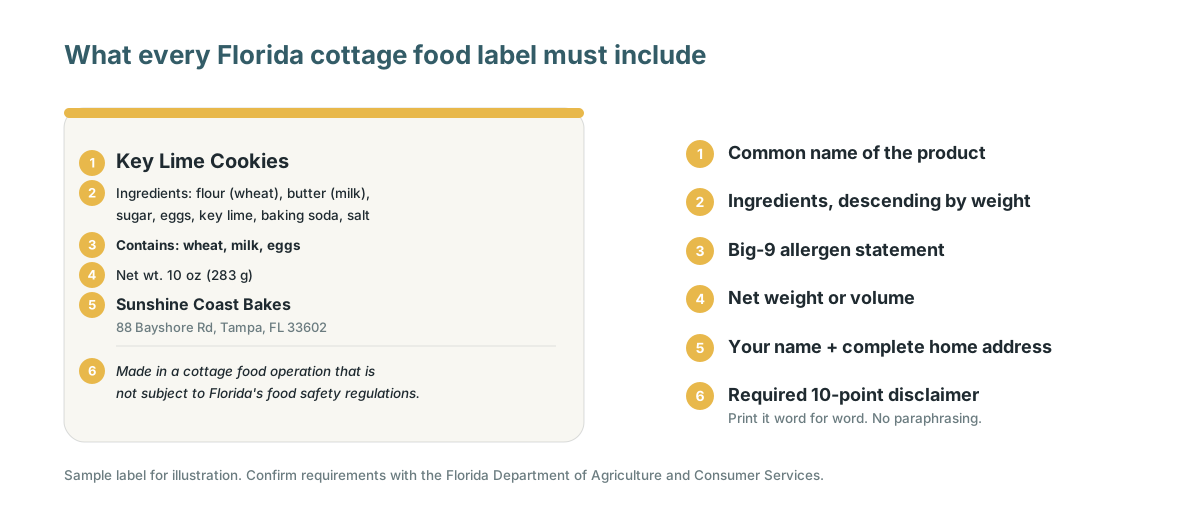
Florida's label rules are straightforward, but the disclaimer language is strict. The statute requires specific wording that you can't paraphrase.
Every product label must include, under § 500.80(3):
- Product name (common name, like "Blueberry Muffins" or "Strawberry Jam")
- Ingredients in descending order by weight
- Allergen statement for the Big 9: milk, eggs, fish, shellfish, tree nuts, peanuts, wheat, soybeans, and sesame
- Net weight or volume
- Your name and complete home address
- The exact disclaimer, in at least 10-point font:
"Made in a cottage food operation that is not subject to Florida's food safety regulations."
Print that phrase exactly. Don't shorten it. Don't reword it. Inspectors and market managers check for this specific language, and a paraphrase won't satisfy the requirement.
A practical tip: design your label so the disclaimer has its own line or text block. It needs to be readable, not buried in a wall of small print.
Where you can sell
Florida cottage food sellers have wide latitude on sales channels:
- Home pickup: Buyers come to you directly
- Farmers markets, flea markets, craft fairs, and community events: All permitted
- Roadside stands and pop-ups: Allowed
- Direct delivery: You can deliver to buyers within Florida
- Online within Florida: Your website, social media, and platforms like Etsy are all fair game for in-state buyers and in-state shipping
The firm limit is wholesale. You cannot sell to grocery stores, restaurants, or any retail location. All sales must be direct to the consumer. If you want to supply local cafes or shops, you'd need to move to a licensed commercial facility.
Out-of-state shipping is also off the table. Once a product crosses state lines, it becomes interstate commerce under FDA jurisdiction, and cottage food law doesn't cover that.
Local business licenses
Florida state law requires nothing. But your city or county might. Miami, Tampa, Orlando, and many other municipalities require a local business tax receipt, which typically costs $25 to $100 per year. Call your city clerk's office before your first sale to check if a local receipt is needed. It's a minor step, but it's worth confirming.
Sales tax
Most cottage food products sold as pre-packaged grocery items are exempt from Florida sales tax. If you sell anything that might be considered a prepared food for immediate consumption (like a fresh cookie from a booth where customers eat it on the spot), the tax classification can get murky. Register with the Florida Department of Revenue at floridarevenue.com for free, and confirm how your specific products are classified.
Managing preorders and local pickup
Florida's permissive law means many home producers run steady volume, especially during farmers market season and the holidays. Managing preorders, batch sizes, and buyer communication over Instagram DMs or spreadsheets gets old fast. Hobby Stall gives you a branded storefront where buyers claim items during a set window, pay you directly via Venmo or Cash App, and get pickup reminders automatically. No commission on orders. See how it works or start your shop.
This post is general information, not legal advice. Verify current requirements with the Florida Department of Agriculture and Consumer Services and your local city or county before launching your cottage food operation.
Frequently asked questions
- Do I need a permit to sell cottage food in Florida?
- No state permit, license, or inspection is required to operate a cottage food business in Florida under Florida Statute § 500.80. Some cities and counties may require a local business tax receipt, typically $25 to $100 per year. Contact your city clerk's office to check local requirements before you start selling.
- What is the gross sales cap for Florida cottage food?
- Florida cottage food operations are capped at $250,000 in gross annual sales under Florida Statute § 500.80. This is one of the highest caps in the country. Once you exceed this threshold, you must transition to a licensed commercial food establishment to continue selling.
- Can I sell cottage food online in Florida?
- Yes. You can sell through your own website, social media, or platforms like Etsy as long as both the seller and buyer are in Florida and delivery stays within state lines. Interstate shipping is not permitted under cottage food law. Crossing state lines brings your products under FDA jurisdiction, which requires a licensed commercial facility.
- What does Florida's required label disclaimer say?
- Every cottage food product sold in Florida must have a label with the exact phrase: 'Made in a cottage food operation that is not subject to Florida's food safety regulations.' This statement must appear in a minimum 10-point font. Omitting or paraphrasing this disclaimer is a compliance violation under § 500.80(3).
- Can I sell wedding cakes under Florida cottage food law?
- Yes, with one condition: the frosting must be shelf-stable. Buttercream and fondant are allowed. Cream cheese frosting is not, because it requires refrigeration and is therefore a prohibited food under Florida cottage food law. Plain or flavored buttercream covers most wedding cake requests.
- Are my cottage food sales subject to Florida sales tax?
- Most cottage food products sold as grocery-type items are exempt from Florida sales tax. Prepared foods sold for immediate consumption may be taxable. Register with the Florida Department of Revenue (free at floridarevenue.com) if you sell any potentially taxable items and check how your specific products are classified.
Keep reading
- Michigan Cottage Food Law: A 2026 Guide for Home Bakers and Makers
Michigan's cottage food law was updated in 2026 to raise the annual sales cap to $50,000 (or $75,000 for high-value products). Learn the allowed foods, labeling requirements, and sales rules from the Michigan Department of Agriculture and Rural Development.
- New York Cottage Food Law: A 2026 Guide for Home Bakers
New York's Home Processor Exemption lets you sell baked goods, jams, and candy from your home kitchen for free. Learn the registration steps, allowed foods, $50K sales cap, and labeling rules as of June 2026.
- How to Sell Handmade Online Without Etsy (Especially If You Sell Locally)
A practical guide for small-batch makers who want to sell handmade products online without relying on Etsy, especially if most of your customers are local.