Michigan Cottage Food Law: A 2026 Guide for Home Bakers and Makers
By Hobby Stall Team · June 13, 2026 · 4 min read
Michigan's cottage food law got a real update in 2026. The old $25,000 annual cap held back a lot of home producers, and the new limit, $50,000 for most operations and $75,000 for high-unit-price products, opens more room to build a genuine business. Here's what the Michigan Department of Agriculture and Rural Development (MDARD) requires and where the boundaries sit.
The 2026 cap update
Michigan's Cottage Food Law exempts qualifying home operations from the licensing and inspection provisions of the Michigan Food Law. For years, the annual gross sales cap sat at $25,000, which was among the more restrictive limits in the Midwest.
The 2026 update changed that. House Bill 4122, enacted as Public Act 51 of 2025, took effect March 24, 2026. The standard cap is now $50,000 in gross annual sales. If your operation sells products priced at $250 or more per unit (think specialty gift sets, custom cakes, or artisan confection boxes), you can earn up to $75,000 per year. MDARD's official one-page guidance at michigan.gov/mdard confirms these figures and notes that the caps will be adjusted for inflation beginning October 1, 2026.
No permit, no inspection, no annual registration fee. You just need to comply with the labeling and sales rules.
What you can sell
Michigan cottage food law covers non-potentially hazardous foods: shelf-stable products that don't support bacterial growth at room temperature. MDARD's definition aligns with the standard used by most states.
Allowed:
- Breads, rolls, muffins, bagels, biscuits
- Cakes and cookies (without cream or custard fillings)
- Pies and pastries (fruit-based, high-acid fillings only)
- Jams, jellies, preserves, and fruit butters (high-acid fruits)
- Dried fruit and dried herbs
- Granola, trail mix, roasted nuts, and nut butters
- Hard candy, fudge, and confections
- Honey and beeswax products
- Dry baking mixes and spice blends
Not allowed:
- Cream-filled pastries or cakes with custard or cream cheese frosting
- Cheesecakes or refrigerated pies
- Meat, poultry, or seafood products
- Fermented foods like kombucha or sauerkraut
- Low-acid canned vegetables without pH verification
- Any food that requires refrigeration to remain safe
The practical test is simple: if the finished product needs refrigeration between production and sale, it's not covered by cottage food law.
Sampling at markets
Sampling is permitted under Michigan cottage food law, which is a real advantage at farmers markets. The Michigan Farmers Market Association confirms that samples are allowed as long as the sample is a non-potentially hazardous food and a label for the product is available for customers to review while sampling. MDARD prohibits cottage food from being used in cooking demonstrations by the market itself, but individual seller sampling is fine.
This distinction matters. A table with small samples of your granola or cookies, with labels visible, is legal. Handing samples out without a label nearby isn't.
Labeling requirements
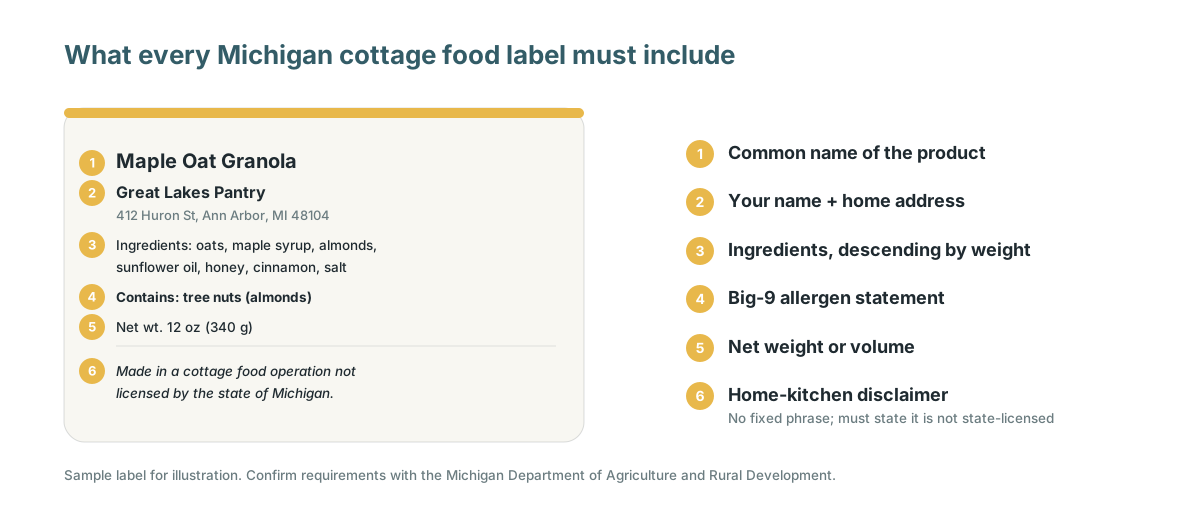
Michigan requires a label on every packaged product, following Michigan Food Law and applicable federal labeling standards. MDARD's cottage food guidance specifies the required elements:
- Product name (common or usual name)
- Your name and home address where the product was made
- Ingredients in descending order by weight, with sub-ingredients listed
- Allergen declarations for the Big 9: milk, eggs, fish, shellfish, tree nuts, peanuts, wheat, soybeans, and sesame
- Net weight or volume
- A disclaimer indicating the product was made in a cottage food operation and is not subject to Michigan's food safety regulations
The disclaimer wording doesn't have a single mandated phrase in Michigan the way Florida's statute does, but the label must make clear that the operation is not state-licensed or inspected. MDARD's website provides sample language. Something like: "Made in a cottage food operation not licensed by the state of Michigan" covers the intent.
Where you can sell
Michigan cottage food law limits sales to direct-to-consumer transactions within Michigan:
- From your home: Buyer pickup at your address
- Farmers markets: Explicitly permitted
- Roadside stands and farm stands
- Community events, flea markets, craft fairs
- Online ordering within Michigan: You can take orders through your website or social media with in-state pickup or delivery
Wholesale to stores or restaurants isn't covered under cottage food. All transactions must be direct to the end consumer. Interstate shipping isn't permitted under state cottage food exemptions.
Managing batch presales in Michigan
Farmers market season in Michigan runs from May through October, and holiday markets in November and December drive a lot of volume for home producers. Pre-selling batches before you bake, managing pickup windows, and sending reminders to buyers who haven't paid all take time when done manually. Hobby Stall is built for this: schedule a drop for your next market weekend, set pickup options and windows, and let buyers claim what they want through your storefront. Payment goes directly to you via Venmo or Cash App, no platform commission. See how it works or start your shop.
This post is general information, not legal advice. Cottage food laws can change with new legislation. Verify current requirements with the Michigan Department of Agriculture and Rural Development at michigan.gov/mdard before starting your operation.
Frequently asked questions
- What is the sales cap for Michigan cottage food in 2026?
- As of the 2026 update to Michigan's Cottage Food Law, the standard annual gross sales cap is $50,000. Operations that sell cottage food products priced at $250 or more per unit can earn up to $75,000 annually. These figures represent a significant increase from the prior $25,000 cap. Verify current limits at michigan.gov/mdard.
- Do I need a license or permit to sell cottage food in Michigan?
- No license or permit is required from the Michigan Department of Agriculture and Rural Development for cottage food operations. Your home kitchen does not need to be inspected. You must comply with Michigan's labeling requirements and sales restrictions under the Michigan Food Law.
- Can I sell cottage food at farmers markets in Michigan?
- Yes. Michigan cottage food sellers can sell directly to consumers at farmers markets, roadside stands, flea markets, community events, and from their home. Sampling is permitted as long as the sample is a non-potentially hazardous food and a label for the product is available for customers to review.
- What foods are prohibited under Michigan cottage food law?
- Any food requiring refrigeration is prohibited. This includes cream-filled pastries, cheesecakes, cream cheese frosting, custards, meat and poultry products, fermented foods, and low-acid canned vegetables. Baked goods, jams, dried products, candy, and other shelf-stable items make up the permitted list.
- What must a Michigan cottage food label include?
- Labels must include the product name, your full name and home address, a complete ingredient list in descending order by weight, allergen statements, net weight or volume, and the statement that the product was made in a cottage food operation not subject to Michigan's food safety regulations. MDARD provides specific label guidance at michigan.gov/mdard.
- Can I sell Michigan cottage food online?
- Michigan cottage food law requires direct sales to consumers within Michigan. You can take orders through a website or social media and arrange in-state pickup or delivery. Interstate shipping is not permitted, as it moves the transaction into federal commerce jurisdiction outside the scope of state cottage food law.
Keep reading
- New York Cottage Food Law: A 2026 Guide for Home Bakers
New York's Home Processor Exemption lets you sell baked goods, jams, and candy from your home kitchen for free. Learn the registration steps, allowed foods, $50K sales cap, and labeling rules as of June 2026.
- Cottage Food Guide for Texas (2026)
What Texas home food sellers need after SB 541: the $150,000 cap, the allowed/excluded list, the exact label disclaimer, online sales rules, and registration.
- How to Sell Home-Roasted Coffee Legally (and Locally)
A practical guide for home and micro-roasters: where roasted coffee fits under cottage food law, what's never covered, and how to sell locally through drops.