New York Cottage Food Law: A 2026 Guide for Home Bakers
By Hobby Stall Team · June 13, 2026 · 4 min read
New York's Home Processor Exemption is one of the more accessible cottage food paths in the Northeast. Registration is free, there's no annual fee, and you can sell from home, at farmers markets, and online within the state. The tradeoff is a specific list of allowed foods that's stricter than most states, and a few surprises that catch new sellers off guard.
Registration: free but required
Unlike California, New York doesn't issue permits through county offices. You register directly with the New York State Department of Agriculture and Markets (NYSDAM) Division of Food Safety and Inspection. The form is FSI-898d, and registration costs nothing.
Here's what the process looks like in practice:
- Check your water source. If your home uses a private well, you need a water potability test from a NYS-certified lab. Results must show negative or absent readings for Total Coliform and E. coli. Municipal water users skip this step entirely.
- No food safety course required. Unlike Colorado and some other states, New York doesn't make you complete food safety training to register as a Home Processor. A short food-handling course is worth taking if you plan to sell wholesale, but it isn't a registration requirement.
- Fill out Form FSI-898d. List every product you intend to sell. You can download the form from the NYSDAM website or request it by email.
- Submit your application. Email it to agr.sm.hpregistrations@agriculture.ny.gov or mail it to NYSDAM, Division of Food Safety and Inspection, 10B Airline Drive, Albany, NY 12235. No fee.
- Keep records. Set up a simple spreadsheet tracking gross sales. You need to stay under $50,000 annually.
Once registered, you're legal to sell. Keep your certificate on file and renew or update your registration if you add new products.
What you can sell
New York's allowed list focuses on non-potentially hazardous foods that don't require refrigeration at any point. Most baked goods fit, but the state has some specific exclusions that trip up new sellers.
Allowed:
- Breads, rolls, biscuits, bagels (standard recipes without fruit or vegetable additions)
- Cakes and cookies (without cream or custard filling)
- Double-crust fruit pies (high-acid fruits like apple, cherry, berry)
- Jams, jellies, and marmalades from high-acid fruits
- Hard candy, fudge, brittles, and caramel
- Granola, trail mix, and caramel corn using commercially processed ingredients
- Dry mixes (soup mixes, spice rubs, coffee beans from commercial sources)
- Muffins and scones (without cream filling)
Not allowed:
- Banana bread, zucchini bread, pumpkin bread, or any fruit/vegetable bread
- Chocolate-covered items or anything requiring chocolate tempering
- Single-crust pies with moist fillings (pumpkin, custard, pecan)
- Pickles, relishes, salsas, or fermented foods
- Cheesecakes, cream pies, or anything requiring refrigeration
- Meat, poultry, or seafood
The fruit/vegetable bread restriction surprises a lot of home bakers. Banana bread is one of the most popular items at farmers markets, but New York considers its high moisture content a food safety concern. If banana bread is your signature product, this is a real constraint to plan around.
The chocolate rule is equally firm. Home kitchens can't maintain the controlled temperatures that chocolate tempering requires for food safety. Chocolate chips baked into a cookie? Fine. A chocolate-dipped strawberry or hand-dipped truffle? Not under this exemption.
Labeling requirements
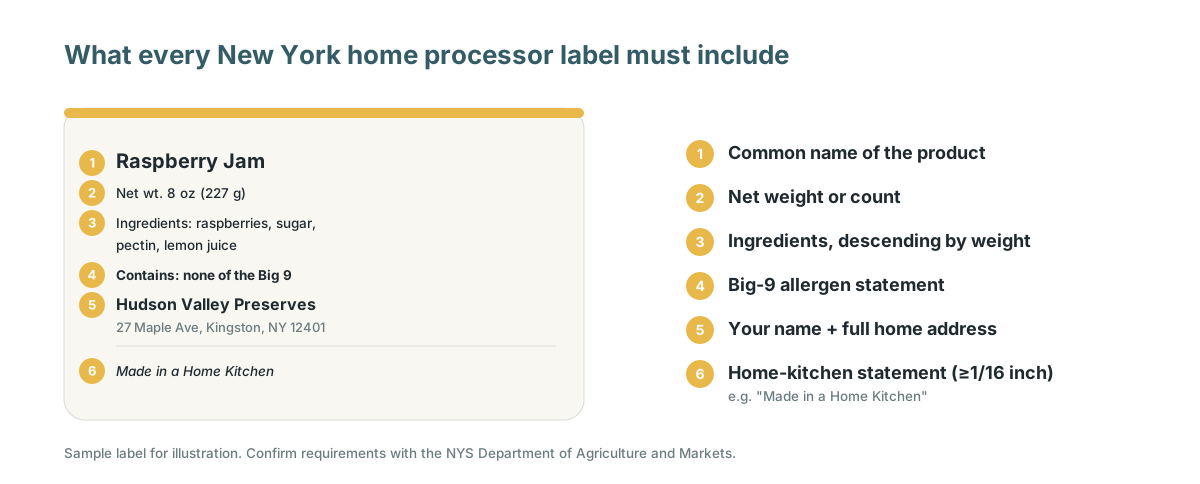
New York's labeling rules come from 1 NYCRR § 276.4. Every product you sell needs a firmly attached label that includes:
- Product name (common name, like "Sea Salt Sourdough Bread" or "Raspberry Jam")
- Net weight or count
- Ingredients in descending order by weight, with sub-ingredients broken out
- Allergen declarations for the Big 9: milk, eggs, fish, shellfish, tree nuts, peanuts, wheat, soybeans, and sesame. You can list them parenthetically in the ingredient list or add a "Contains:" line.
- Your name and full home address
- A home-kitchen statement, in a font at least 1/16 inch tall. New York accepts wording like "Made in a Home Kitchen" or "Made at Home by [your name]."
That statement is what the inspector looks for first. It has to be there, and it has to be legible. Don't bury it in small print.
For jams, jellies, and similar preserves, New York also requires rigid metal lids on glass jars (1 NYCRR § 276.4). Reused lids that don't seal properly aren't compliant.
Where you can sell
Registered Home Processors can sell through several channels:
- From home: Direct pickup at your address
- Farmers markets and craft fairs: Both are explicitly permitted
- Online within New York: Your website, social media, in-state shipping
- Wholesale to local retailers: Grocery stores, cafes, and restaurants within the state are allowed, as long as products are properly labeled and pre-packaged
The wholesale permission is broader than many states. If a local cafe wants to stock your cookies, that's legal. Cross-state shipping is not, since that triggers FDA jurisdiction requiring a licensed commercial facility.
Selling alongside a preorder system
Many New York home processors run presale cycles for weekend farmers markets or holiday seasons. Taking orders in advance, managing batch sizes, and keeping buyers informed about pickup windows is a lot to manage manually. Hobby Stall is built for exactly this workflow: you set up a drop with your available items, buyers claim what they want, and payment happens via Venmo or Cash App directly with you. No transaction fees, no commission. See how it works or start your shop.
This post is general information, not legal advice. Verify current requirements with the New York State Department of Agriculture and Markets before launching your home processor operation.
Frequently asked questions
- Do I need a license to sell homemade food in New York?
- No license is required, but you do need to register as a Home Processor with the New York State Department of Agriculture and Markets. Registration is free and there is no renewal fee. You submit a completed Form FSI-898d by email to agr.sm.hpregistrations@agriculture.ny.gov or by mail to NYSDAM, Division of Food Safety and Inspection, 10B Airline Drive, Albany, NY 12235.
- What is the sales cap for New York home processors?
- Registered Home Processors under the standard exemption path are capped at $50,000 in gross annual sales. If your sales are approaching that threshold, contact the NYSDAM Division of Food Safety and Inspection about next steps, which typically involve transitioning to a licensed food processing facility.
- Can I sell banana bread or zucchini bread in New York?
- No. New York prohibits fruit and vegetable breads including banana bread, zucchini bread, and pumpkin bread under the Home Processor Exemption. These are considered potentially hazardous due to high moisture content. Standard breads, rolls, muffins, and cakes without cream filling are permitted.
- Can I sell chocolate-covered items in New York?
- No. New York specifically prohibits tempering chocolate in home kitchens. Chocolate-covered items, chocolate bark, and chocolate-dipped products are not allowed under the Home Processor Exemption. Chocolate as a baked-in ingredient in cookies or cakes is fine.
- What must appear on a New York home processor label?
- Every label must include the product name, net weight or count, ingredients in descending order by weight, allergen declarations for the Big 9, your name and full home address, and the mandatory phrase 'Made in a Home Kitchen' in a clearly visible font of at least 1/16 inch. The statement is required by 1 NYCRR § 276.4.
- Can I sell online and ship within New York State?
- Yes. You can take orders through your website or social media and ship to customers within New York State. Interstate shipping is not permitted under the Home Processor Exemption, as crossing state lines puts you under FDA jurisdiction requiring a commercial facility.
Keep reading
- Cottage Food Guide for Texas (2026)
What Texas home food sellers need after SB 541: the $150,000 cap, the allowed/excluded list, the exact label disclaimer, online sales rules, and registration.
- Cottage Food Guide for Illinois
Everything Illinois home food sellers need to know: what you can sell, labeling rules, CFPM certification, registration costs, and where to sell legally.
- How to Sell Pottery Without Etsy: Drops, Preorders, and Local Fans
A working guide for ceramicists who want to run shop updates, batch drops, and local pickup off Etsy, without rebuilding their whole business.